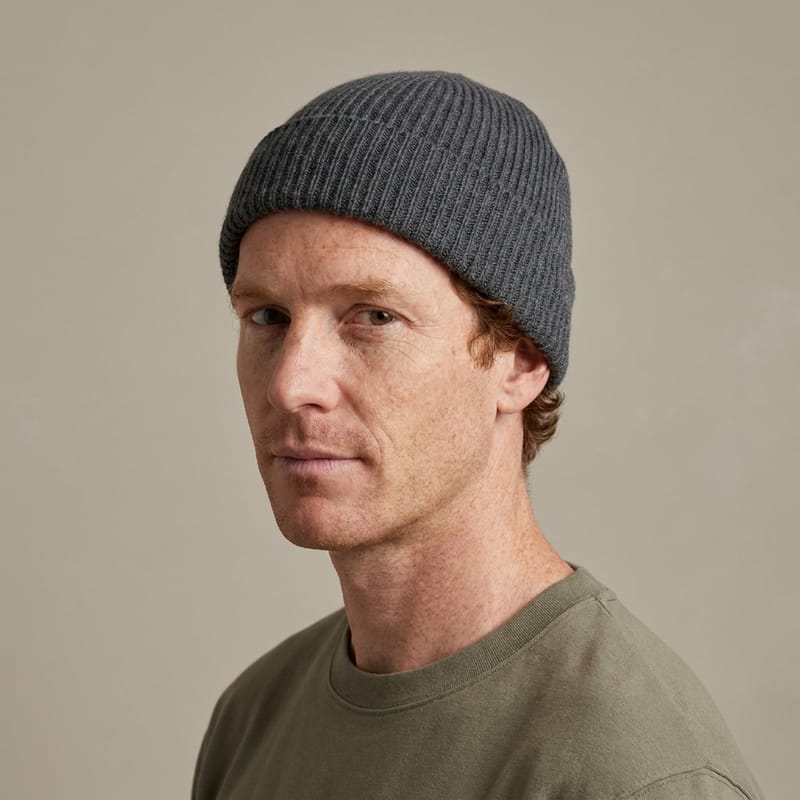
The beanie
A knitted cap with a folded cuff. See where it should sit on your forehead before you pick one.
Does it suit me? See it on my photoFree first try-on with a free account · right in your browser
- 1
- 2
- 3
Step 1 / 3
Take a front selfie
Look straight into the camera with your whole head in the frame, hair as you usually wear it, no hat. Even lighting works best.
Step 2 / 3 · optional
Now a side photo (~45°)
Turn your head slightly to one side for a second photo. The extra angle lets us fit the hat to the real shape of your head.
Step 3 / 3
Choose a hat
Pick a style from the gallery, or upload a photo of any hat you want to try.
- Measuring your face shape…
- Reading your proportions and hair…
- Matching hats to your face…
- Picking your best fit…
Analysis complete
We found your best hat
See yourself in it — front, side and back.
The analysis didn't work this time.
Pick a hat
Your photos are processed securely and saved in your private Hat Suite until you delete them. Never shared, never used for training.
Free account · your first try-on is free
See your result — free
Create a free account to run your try-on and keep every look in your Hat Suite. Your first one is on us.
We sent a 6-digit code to
We'll email you hat ideas now and then — unsubscribe anytime with one click.
A beanie is a brimless knitted cap. The classic is rib-knit with a folded cuff; a fisherman beanie is short and sits above the ears, a slouchy one has extra length that falls toward the back, and a fitted one hugs the head without a cuff. Wool and wool blends keep you warm even when damp; acrylic is cheaper and easier to wash.
Where it sits changes the face. Pulled down to the eyebrows, a beanie frames the face tightly and shows its shape; worn up off the forehead with the cuff folded, it shows more forehead and adds a little height.
The yarn decides how a beanie feels. Merino is fine and soft against the forehead, lambswool is warmer and a little rougher, cashmere is the softest and needs the gentlest care, and cotton suits spring and autumn. Rib knit stretches and springs back, so it holds its fit on most heads; a waffle or cable knit adds texture and bulk.
A beanie goes with almost anything casual, from a parka or a field jacket to a peacoat and a sweater. Match the knit to the coat: a fine knit with wool coats and smarter layers, a chunky one with outdoor jackets. Against the face, the thickness of the knit and the depth of the cuff set the proportions: a deep cuff draws a strong band across the forehead, a thin one or none keeps the look quiet.
How to choose and wear a beanie
- 1
Choose the cut
Pick a classic cuffed beanie for everyday warmth, a fisherman beanie to show your hair and ears, a slouchy cut for volume at the back, or a fitted one for a sleek, close outline.
- 2
Pick the yarn for the weather
Choose a fine merino for town and sensitive skin, a chunkier lambswool for real cold, and cotton for mild days. If wool itches you, look for merino or cashmere, or a band lined with fleece.
- 3
Set the cuff
Fold the cuff once and pull the beanie on from the back so the cuff sits level, just above your eyebrows or a little higher. Cover the tops of your ears in the cold; fold it higher for town.
- 4
Wash it gently
Hand-wash wool beanies in cool water with a wool detergent, squeeze rather than wring, and dry them flat on a towel. Hot water and the dryer shrink and felt wool, and hanging a wet beanie stretches it.
FAQ
How tight should a beanie be?
Snug, not tight: it should stay put without leaving a mark on your forehead. The cuff usually sits just above the eyebrows or a little higher, covering the tops of the ears in the cold.
What is a fisherman beanie?
A short beanie with a deep cuff that sits above the ears instead of over them. It shows more of the face and of the hair at the sides, and it suits a short haircut or a beard, which it leaves in view.
Should a beanie cover your ears?
In the cold, yes: the cuff should cover the tops of your ears, which feel the cold first. On milder days a fisherman or short cuffed beanie can sit above the ears and show more of your face and hair; both are right, they just do different jobs.
Which beanie is the warmest?
A dense wool knit, ideally with a folded cuff or a fleece lining. Wool keeps insulating when it gets damp from snow or breath, and a cuff doubles the knit over your forehead and ears. Thin cotton and loose, open knits are for mild days.
Can wearing a beanie cause hair loss?
Not in ordinary wear. A beanie that is snug but not tight does not harm the hair; only a very tight hat worn for long hours, day after day, can rub and strain the hair along the hairline. Wear your real size, keep the beanie clean, and take it off indoors.
Can a selfie tell me which hat suits my face?
Yes. Take a selfie on this page and ask which hat fits you best. Your face shape is shown to you at no cost. We also pick the one hat from the gallery that fits your face, your proportions and your hair; seeing yourself in it is a try-on for one credit, once you have bought credits.