
Baseball cap
An adjustable strapback takes in a small head better than most hats, and a low-profile cap with a shorter crown and brim keeps the cap in scale with the face.
Try it on →| Head circumference | US hat size | Letter size |
|---|---|---|
| up to 20 in (51 cm) | 6 3/8 | XXS |
| 20 1/8–20 3/8 in (51.1–52 cm) | 6 1/2 | XS |
| 20 1/2–20 3/4 in (52.1–53 cm) | 6 5/8 | XS |
| 20 7/8–21 1/4 in (53.1–54 cm) | 6 3/4 | S |
| 21 3/8–21 5/8 in (54.1–55 cm) | 6 7/8 | S |
| 21 3/4–22 in (55.1–56 cm) | 7 | M |
| 22 1/8–22 3/8 in (56.1–57 cm) | 7 1/8 | M |
| 22 1/2–22 3/4 in (57.1–58 cm) | 7 1/4 | L |
| 22 7/8–23 1/8 in (58.1–59 cm) | 7 3/8 | L |
| 23 1/4–23 1/2 in (59.1–60 cm) | 7 1/2 | XL |
| 23 5/8–24 in (60.1–61 cm) | 7 5/8 | XL |
| 24 1/8–24 3/8 in (61.1–62 cm) | 7 3/4 | XXL |
| 24 1/2–24 3/4 in (62.1–63 cm) | 7 7/8 | XXL |
| 24 7/8–25 1/8 in (63.1–64 cm) | 8 | XXXL |
| 25 1/4–25 1/2 in (64.1–65 cm) | 8 1/8 | XXXL |
| 25 5/8–25 7/8 in (65.1–66 cm) | 8 1/4 | 4XL |
| 26 in (66.1 cm) and over | 8 3/8 | 4XL |
A head of about 21 1/4 inches (54 cm) or less, a US 6 3/4 (S) or smaller, is small for off-the-shelf hats: most one-size hats and caps are cut for an average head of 22 to 23 inches and drop over the ears. Measure first, then look for makers that sell XS (6 1/2 to 6 5/8) and below, or for adjustable bands.
Then keep the hat in scale. A wide brim and a tall crown swamp a small head and narrow shoulders; a trilby, a pork pie, a cloche, a beret or a low-profile cap stays in proportion. A hat that is a little loose can be fixed with sizing tape behind the sweatband; one that is far too big cannot.
Read the label closely, too. In letter sizes an S covers both a 6 3/4 and a 6 7/8, so a hat labeled S can still be a size loose on a small head; look for XS (6 1/2 to 6 5/8) or XXS (6 3/8), and for ranges that list exact fitted sizes. Then judge the hat in a full-length mirror, since scale against your shoulders matters as much as the fit around your head.
These styles come in small sizes or adjust, and keep their proportions on a smaller head.
An adjustable strapback takes in a small head better than most hats, and a low-profile cap with a shorter crown and brim keeps the cap in scale with the face.
Try it on →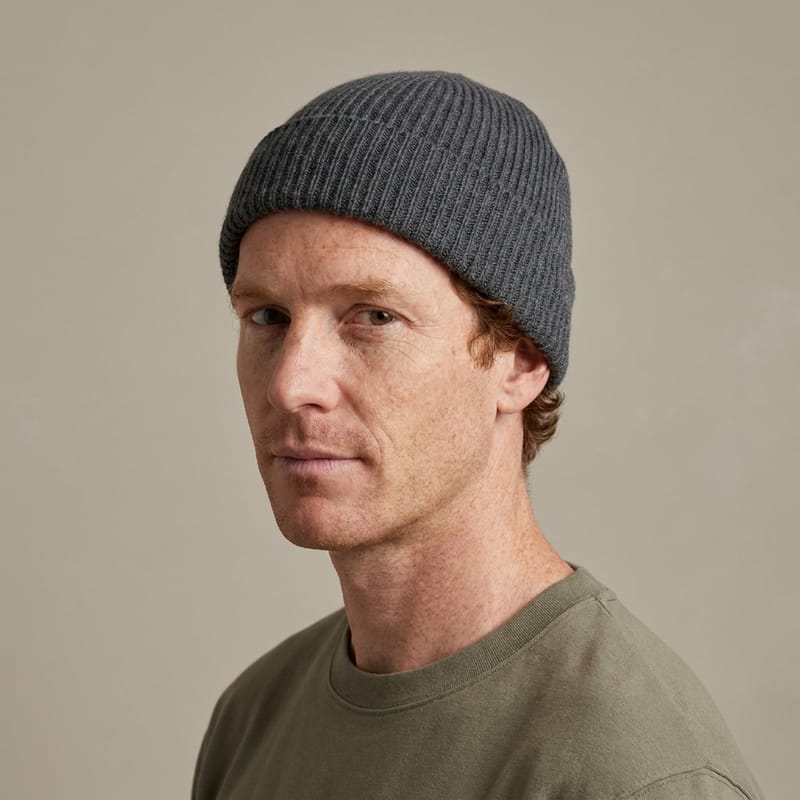
A fine-knit fitted beanie or a short fisherman beanie stays in scale on a small head; a chunky slouchy one swamps it.
Try it on →
A fedora with a brim under 2 1/4 inches and a lower crown keeps a small head in proportion, and felt fedoras are widely sold in S and XS.
Try it on →
The short brim and compact crown are in scale with a small head, and many trilbies are sold in S and XS. Worn back on the head, it never swamps the face.
Try it on →
The flat cap's slim, close cut stays in scale on a small head, and fitted flat caps are widely made in S and XS.
Try it on →
Its short brim and low crown are in proportion with a small head; a pork pie rarely overwhelms a slight frame.
Try it on →
A beret takes in a small head well: the band holds and the crown can be shaped. Choose a smaller diameter so the crown does not swamp the face.
Try it on →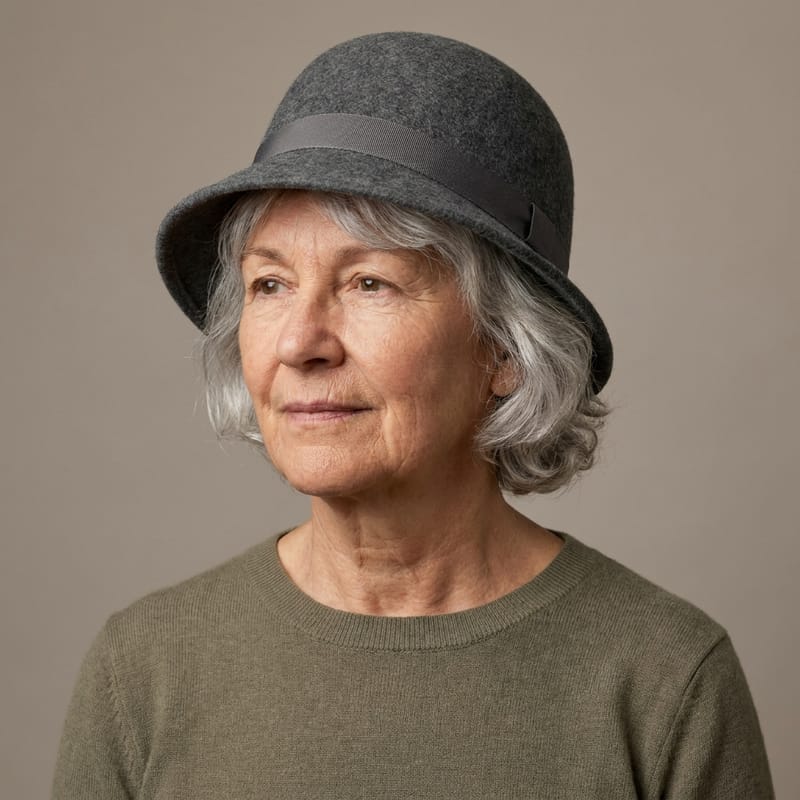
A cloche is cut to hug the head, so in your real size it stays in scale with a small head and a slight frame.
Try it on →Step 1 / 2
Look straight into the camera with your whole head in the frame, hair as you usually wear it, no hat. Even lighting works best.
Step 2 / 2 · optional
Turn your head slightly to one side for a second photo. The extra angle lets us fit the hat to the real shape of your head.
Step 3 / 3
Pick a style from the gallery, or upload a photo of any hat you want to try.
Analysis complete
See yourself in it — front, side and back.
The analysis didn't work this time.
Pick a hat
Your photos are processed securely and saved in your private Hat Suite until you delete them. Never shared, never used for training.
Free account · your first try-on is free
Create a free account to run your try-on and keep every look in your Hat Suite. Your first one is on us.
We sent a 6-digit code to
We'll email you hat ideas now and then — unsubscribe anytime with one click.
Wrap a soft tape around your head about a finger above the ears and eyebrows. Keep it snug: hat sizes are only about 3/8 inch (1 cm) apart, so a loosely held tape can add a whole size.
Use the calculator above: 21 1/4 inches (54 cm) is a 6 3/4 (S), about 20 3/4 inches (53 cm) a 6 5/8 (XS), and about 20 3/8 inches (52 cm) a 6 1/2 (XS). Shop by that number, not by "one size".
Look at the hat in a full-length mirror, not only at your face. The brim should stay well inside the line of your shoulders, and the crown should sit down on your head rather than tower over it.
Try hats that stay in scale first: a trilby, a pork pie, a cloche, a beret, a fisherman beanie or a low-profile cap. Choose medium brims of about 2 to 2 1/2 inches and keep crowns low.
A US 6 3/4 (S) or smaller: a head circumference of about 21 1/4 inches (54 cm) or less. XS covers 6 1/2 to 6 5/8, and some makers go down to 6 3/8.
Put foam sizing tape behind the sweatband, all the way round or just at the back. It takes up one or two sizes; more than that and the hat's proportions will be off anyway.
Yes, if the brim stays in proportion to your shoulders: a medium brim of about 2 to 2 1/2 inches looks deliberate, while a 4-inch sun brim tends to swamp a petite frame.
Often, for caps and beanies: a large children's or teen size can fit an adult head of about 21 inches or less. Go by the measurement in inches or cm rather than the age on the label, and try adult XS first, since children's hats are cut for children's proportions.
It slides down onto your ears or eyebrows, turns when you turn your head, or lifts off in a light wind. A hat that fits stays level about a finger above your ears and eyebrows. If it is close, sizing tape behind the sweatband fixes it; if it covers your ears, go down a size.
Often better than one-size hats. A strapback or snapback cap, a hat with an inner drawstring and a knit beanie all take in a small head. Check that the strap still closes neatly at its tightest setting and that the crown does not stand empty above your head.