How should a hat fit?
A hat can be your size on paper and still fit badly. Circumference is only the start: the hat also has to match the shape of your head, sit at the right depth and angle, and stay in proportion with your face and your build.
This guide covers where a hat should sit, how to tell a hat that is too small from one that is too big, what changes between caps, felt, straw and knit, and what you can put right yourself. If you have not measured your head yet, the hat size calculator turns your measurement into a size first.
Where a hat should sit
Seen from the side, the band of a brimmed hat runs almost level: across your forehead about a finger above your eyebrows, about a finger above the tops of your ears, and around the bump at the back of your skull. It should touch your head all the way round with light, even pressure.
Depth is the second check. The crown has to come down far enough that the hat sits on your head rather than on top of it. If you see daylight between the band and your temples, or the hat rises when you look up, the crown is too shallow for you or the size too small.
Angle comes last and is partly a matter of taste. Most brimmed hats look best level or tipped slightly forward; a trilby is worn a little back, a beret to one side, a cloche down to the brows. A cap sits with its peak straight ahead and its back strap above the ridge at the base of your skull.
Signs a hat is too small
A hat that is too small rides up. It sits high and looks perched, and it creeps upward every time you raise your eyebrows. After half an hour the band presses a line into your skin, and the pressure turns into a dull ache at the temples or across the forehead.
On a felt or straw hat the sweatband looks strained and the brim may tip up at the back, because your head is forcing the hat open. A fitted cap that is too small bulges at the panels, an adjustable one ends up on its last hole, and a beanie slides up off your ears within minutes.
There is not much you can do about it. Soft felt can be eased about a quarter size by a hatter with steam and a stretcher. Straw and hard felt barely give, and a fitted cap gives nothing, so those go back for the next size up.
Signs a hat is too big
A hat that is too big drops toward your eyebrows and the tops of your ears, turns when you turn your head and lifts off in a gust of wind. From the front it can look as if the hat is wearing you, with too much crown above a face that seems to shrink beneath it.
Run a finger round the inside of the band while you wear it. If there is room for more than a finger at the sides and the back, the hat is loose. A little too big is still the better mistake, because a loose hat is easy to take in.
Sizing tape, a self-adhesive foam strip stuck behind the sweatband, takes up the slack in a hat that is up to about a size too big. Spread it evenly around the band so the hat still sits level. Beyond that, the tape changes how the hat sits, and a smaller size will fit better than a padded one.
Long heads, round heads: why size is not everything
Seen from above, every head is an oval, but not the same oval. Two people with the same circumference can have a long, narrow head or a short, broad one. A hat blocked for an average oval presses at the front and back of a long head while gaping at the sides, and does the opposite on a round one.
Hatters speak of long oval, regular oval and round oval fits, and some makers say which one they cut. If a hat in your measured size pinches in two places and gaps in two others, the shape is the problem, not the size: try another maker, or have a hatter shape a felt hat to your head with steam.
How the fit differs from hat to hat
Every material forgives a different amount, so the size that is right in one hat can be wrong in the next. These six cover the main cases, from a cap that adjusts to a hat that gives nothing.

Baseball cap
Fitted caps come in exact sizes and hardly stretch; snapback, strapback and stretch-fit caps cover a range. Crown height matters as much as size: a low-profile cap hugs the head, a high-profile one stands up above it.
Try it on me →
Fedora
Soft felt settles to your head over the first weeks of wear, and a leather sweatband settles with it. Buy it snug but comfortable in the shop, never tight in the hope that it will stretch.
Try it on me →
Panama hat
Woven straw keeps the size it was blocked to and cracks if forced, so it has to fit from the first day. One that is slightly big takes sizing tape; one that is small cannot be rescued.
Try it on me →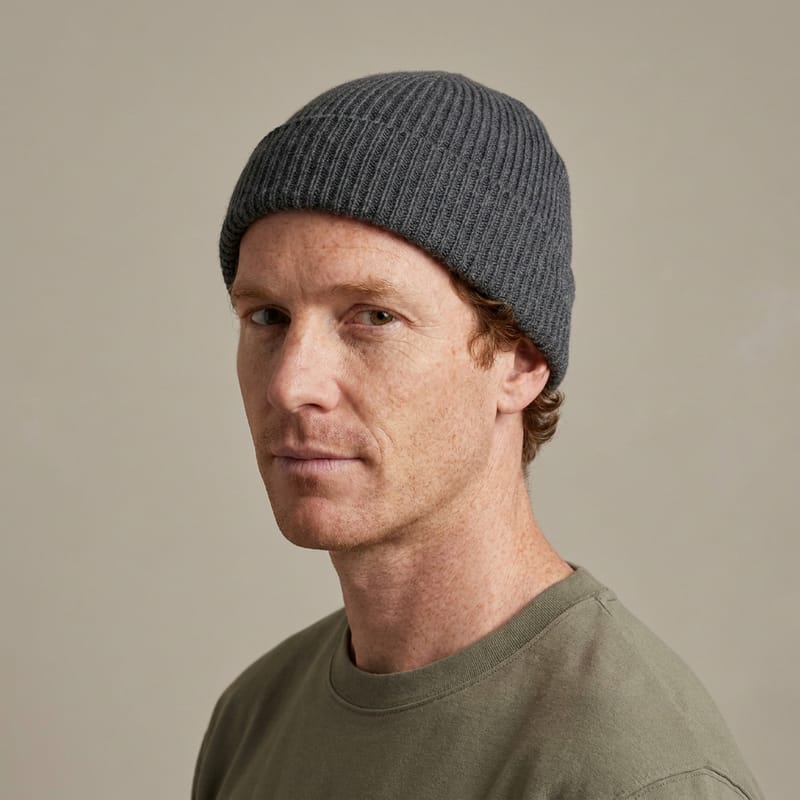
Beanie
Knit stretches, so most beanies come in one size and you choose by depth instead. A cuffed beanie should cover the tops of your ears; a fisherman beanie stops above them on purpose.
Try it on me →
Bowler hat
A rigid crown has no give at all, so it has to match both your size and the oval of your head. Try it on with your hair the way you usually wear it, since there is no room to adjust later.
Try it on me →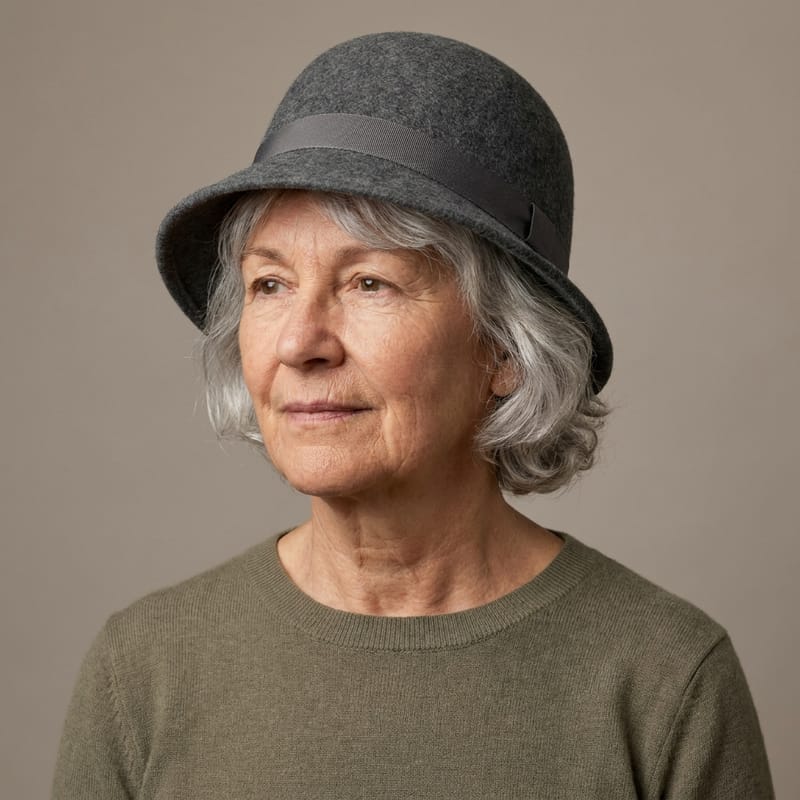
Cloche
A cloche is meant to sit deep, down to the brows and over the tops of the ears, so it needs enough crown depth for your hair. Short hair or a low bun leaves room; a high ponytail does not.
Try it on me →The fit you see in the mirror: proportion
Once a hat fits, look at it in a full-length mirror, not just in a close-up. A brim a little wider than your face looks balanced on most people, and a tall or broad frame can carry more. A narrow brim on broad shoulders makes the head look small; a very wide one on a slight build takes over the whole outline.
Crown height works on the face. A taller crown makes a short or round face look longer, while a lower crown keeps a long face in balance. The pages on hats for big heads, hats for small heads, hats for a round face and hats for an oblong face go into the details, and the guide to hat styles shows which crowns and brims each style has.
Buying a hat that fits, in a shop or online
In a shop, wear the hat for a few minutes before you decide. Look down at your feet and up at the ceiling, turn your head quickly, and check the back in a second mirror. A hat that fits well feels like nothing after five minutes; one that you keep noticing will not get better.
Online, shop by inches or centimeters rather than by S, M and L, because letter sizes shift from one maker to the next. Hold the maker's chart against a hat you own that fits, and check the return policy before you order a size you have never worn. Our hat size calculator gives you your US and letter size from one measurement.
Whichever way you buy, measure with your hair the way you will wear it under the hat, and measure twice. Thick hair worn loose can add a quarter inch or more to the number; a fresh short haircut can take it away.
FAQ
Should a hat cover your ears?
A brimmed hat sits about a finger above the tops of your ears and never pushes them down. Beanies and cloches are made to cover the ears; a fisherman beanie and most caps leave them free.
How much room should there be between my head and the hat?
One finger slid between the sweatband and your forehead is the usual check: it should go in without forcing. If two fingers fit, the hat is loose enough to blow off and needs sizing tape or a smaller size.
Do felt hats stretch over time?
A little. Soft felt settles to the shape of your head over the first weeks, and a hatter can ease it by about a quarter size. Hard felt and straw barely give, so buy those in your exact size.
Should a baseball cap be tight?
Snug at the band and easy on top: the band holds the cap in place without leaving a mark, while the crown keeps a little air above your head. A fitted cap one size too small will not stretch to fit.
Why does my hat fit around but hurt at the forehead?
Your head is probably a longer oval than the hat. The circumference matches, but the front and back press while the sides gap. Look for a maker with a long-oval fit, or ask a hatter to shape a felt hat to your head.
How should a hat fit with long hair?
Try hats with your hair the way you will wear it under them. Loose hair or a low ponytail adds a little at the back; a high bun needs a hat that sits clear of it, such as a beret worn to the side.
Can I wear a hat that is a size too big?
Yes, with sizing tape behind the sweatband. One size too big is easy to correct; at two sizes the hat starts to sit differently, and a smaller size is the better buy.