Different hat styles, explained
Hats differ in only four things: the shape and height of the crown, the width and set of the brim, what they are made of, and how they sit on the head. Once you can read those four, you can name almost any hat in a shop window and judge whether it would work on you before you put it on.
This guide walks through the 16 styles in our gallery, grouped by family: caps, felt hats with a brim, straw hats, wide brims and soft hats. Each comes with its photo, what tells it apart from the hats next to it, and a link to see it on your own selfie.
The four things that set hat styles apart
The crown is the part that covers your head. It can be creased down the middle and pinched at the front, pressed flat with a round channel around the top, blocked into a hard dome, or left soft so it takes the shape of your head. A taller crown adds height to the face; a lower one keeps the hat quiet.
The brim is everything that sticks out around it. Hatters call a brim under about 2 inches a stingy brim, 2 to 3 inches a medium brim and anything wider a wide brim. How it is set matters as much as its width: a snap brim tips down at the front, a curled brim rolls up at the sides, a flat brim stays level all round. Caps trade the brim for a single peak at the front.
The material sets the season and the level of formality. Wool and fur felt are for fall through spring, straw for summer, cotton twill and canvas for everyday wear, knit for the cold and tweed for the country. Felt and straw hats are sold in exact sizes, while knit and stretch fabrics cover a range.
The last thing is how the hat is worn: level on the brow, tipped back, pulled down over the ears or set to one side. The same hat reads formal or relaxed depending on that angle and on the clothes below it.
Caps: a peak instead of a brim
Caps shade the eyes with a peak at the front and leave the sides and back bare. They come in two families: sporty caps with a rounded crown of six panels, and cloth caps whose body is pulled forward over a short, stiff peak.

Baseball cap
Six triangular panels meet at a button on top, over a curved peak. Structured caps stand tall at the front; unstructured ones fold softly onto the head. It is the everyday cap, sold fitted or with a snap or strap at the back.
Try it on me →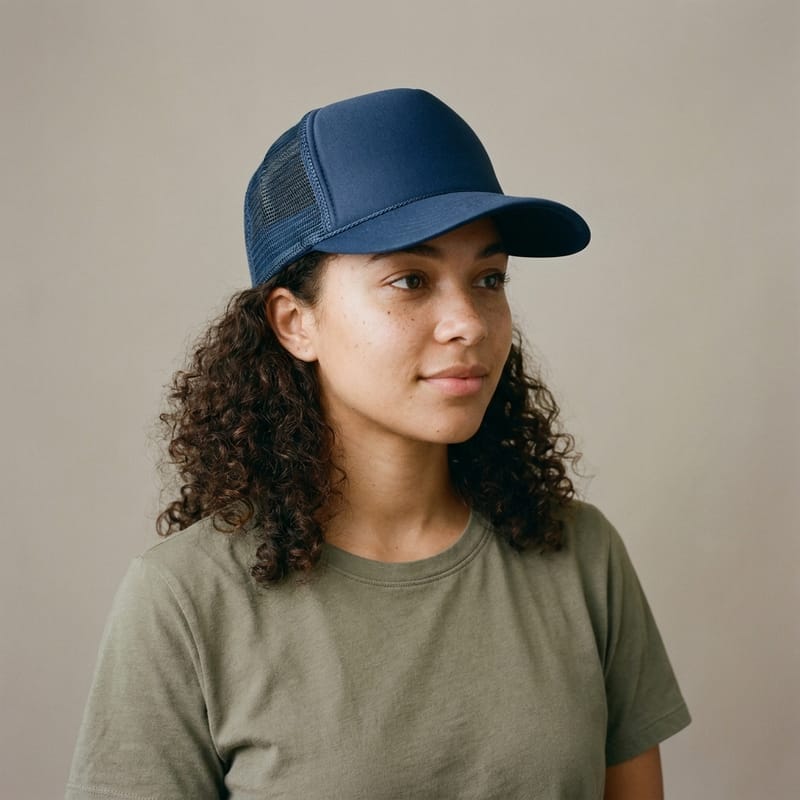
Trucker hat
The baseball cap's sibling, with a tall foam front panel, a mesh back that lets air through and a plastic snap to adjust it. It started out as a promotional giveaway from farm suppliers, and its front panel is still made to carry a logo or a slogan.
Try it on me →
Flat cap
One flat piece of cloth, often wool tweed, drawn forward over a short stiff peak, so the cap sits low and trim. It reads countryside and smart casual, and on a cold day it is warmer than it looks.
Try it on me →
Newsboy cap
Eight panels gathered at a button on top give it a fuller, rounder body than the flat cap over the same short peak. That extra volume balances a full face and longer hair better than the flat cap does.
Try it on me →Felt hats with a brim: fedora, trilby, pork pie and bowler
These four are the tailoring hats, worn with overcoats and jackets. Three of them are soft felt and differ mostly in proportion. The bowler is the odd one out: a hard hat that keeps its shape whatever you do.

Fedora
A creased crown pinched at the front and a medium brim of about 2 1/2 inches, snapped down at the front. It is the reference point the other three are measured against.
Try it on me →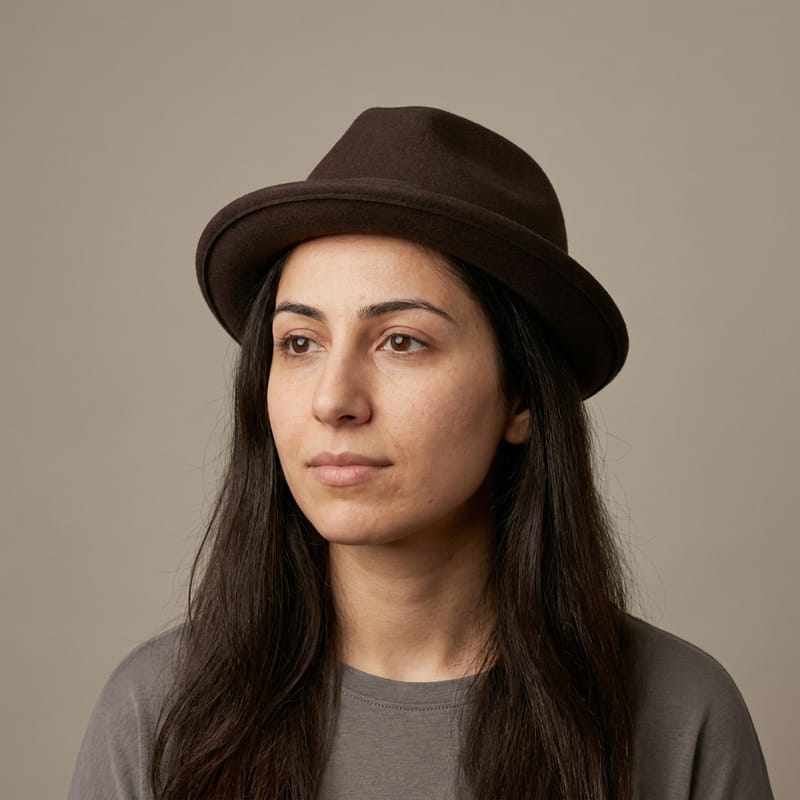
Trilby
Easy to mistake for a fedora, but its brim is short, angled down at the front and turned up at the back, and its crown is lower. It is worn tipped back a little and suits a slighter frame.
Try it on me →
Pork pie hat
A flat top with a round channel pressed into it, a shallow crown and a short brim turned up all round. Where a fedora rises to a point at the front, the pork pie stays flat and graphic.
Try it on me →
Bowler hat
Felt stiffened and blocked into a rounded dome, with a short brim rolled up at the sides. Being hard, it never molds to your head, so it is bought in your exact size and worn straight. Americans call it a derby.
Try it on me →Straw hats for summer: Panama and boater
Straw lets air through, so these are the warm-weather counterparts of the felt hats. Straw does not stretch the way felt does and can crack if it is forced, so buy it in the size you measure.

Panama hat
Woven by hand in Ecuador, despite the name, from the straw of the toquilla palm, usually in a fedora shape with a pinched crown. The finer and tighter the weave, the lighter the hat and the higher the price.
Try it on me →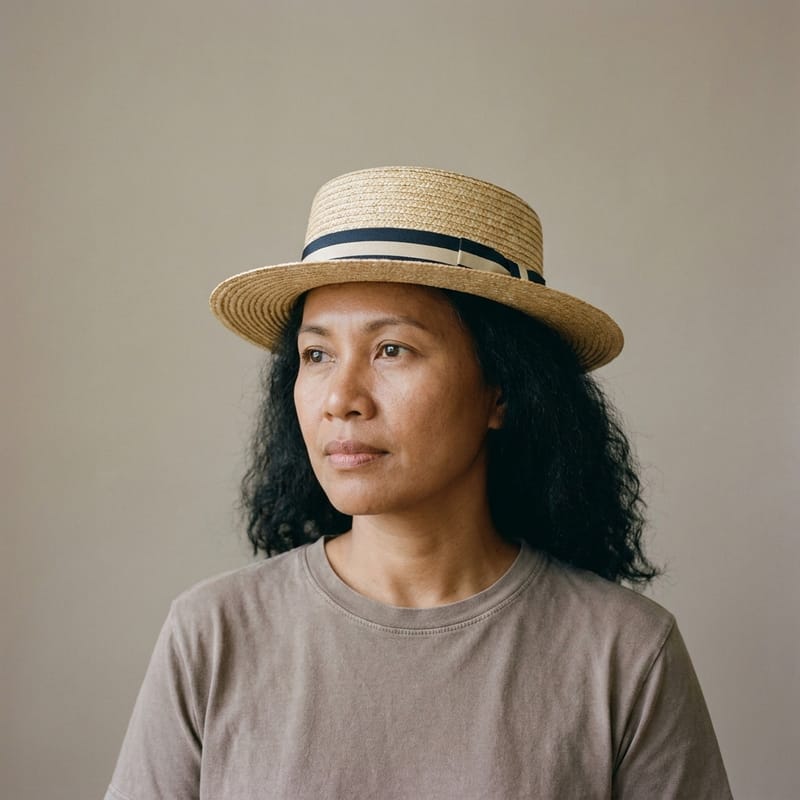
Boater
Stiff braided straw with a flat top, a flat brim and a wide ribbon band. It is the most formal of the straw hats, at home at summer garden parties and regattas and with a linen jacket.
Try it on me →Wide brims: cowboy hat and floppy sun hat
A brim of 3 inches or more changes the outline of your whole body, not just your face. These two need the most care with scale: the wider the brim, the more it has to match your shoulders and your height.

Cowboy hat
A tall creased crown and a brim of about 4 inches curled up at the sides, in felt for the cool months and straw for summer. The crease gives each variety its name; the cattleman, with a center crease and a dent on each side, is the one most people picture.
Try it on me →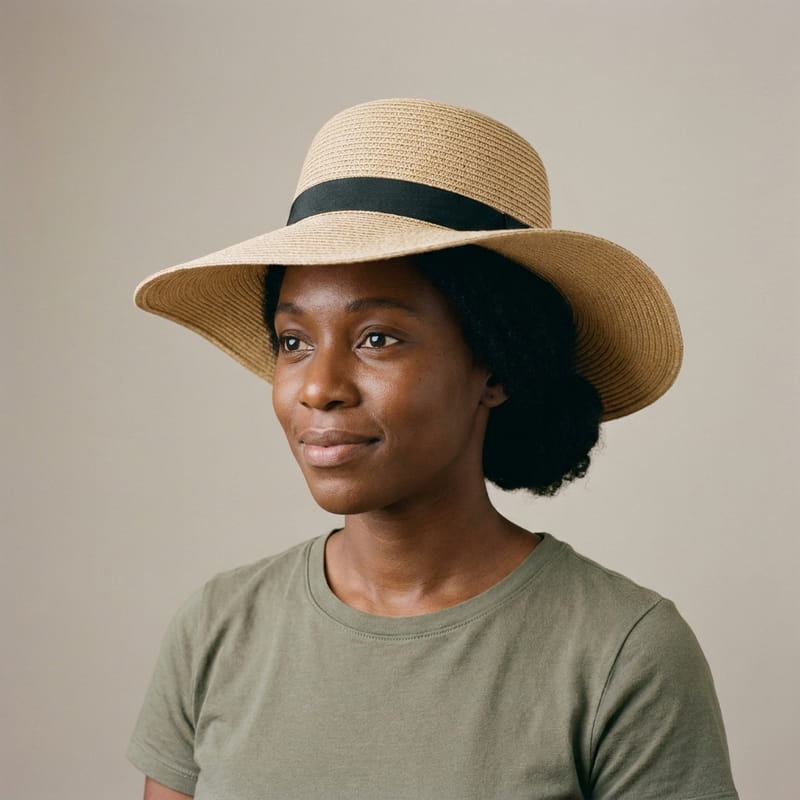
Floppy sun hat
A soft, wide brim of about 4 to 6 inches that droops and moves, over a low crown, in straw or cotton. It is a sun hat first, shading your face, your neck and the tops of your shoulders.
Try it on me →Soft hats: beanie, bucket hat, beret and cloche
Soft hats have no stiffened parts, so they follow the shape of your head. They are the easiest hats to wear and the easiest to get wrong in proportion, because a soft hat shows exactly how large or small your head is.
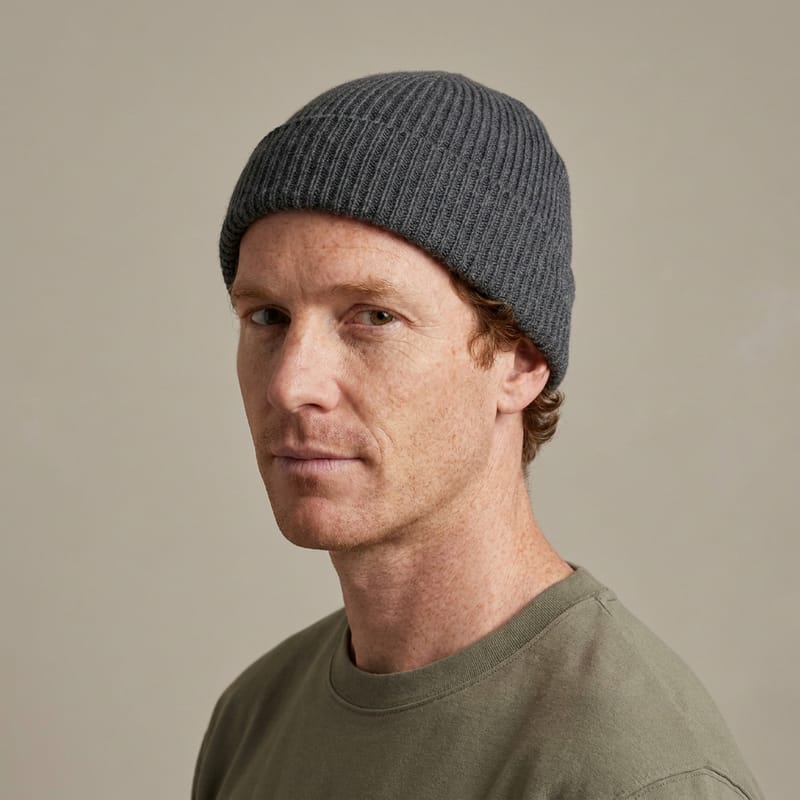
Beanie
A close knit hat worn cuffed and snug, slouched long at the back, or short above the ears in the fisherman style. Because the knit stretches, one size fits most heads.
Try it on me →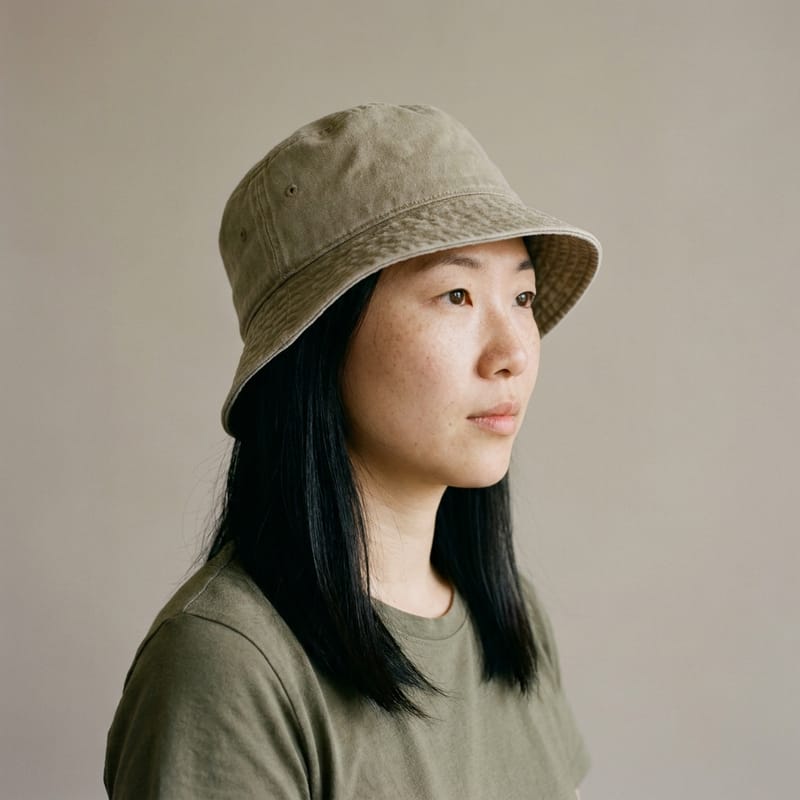
Bucket hat
A soft crown and a narrow brim sloping down all round, in cotton twill, canvas or denim. It began as a rain hat for fishermen and farmers and still folds flat into a pocket.
Try it on me →
Beret
A round, flat crown of felted wool with no brim at all, held by a band and worn tilted to one side. You set its shape yourself each time you put it on, pulling the crown to the side or the back.
Try it on me →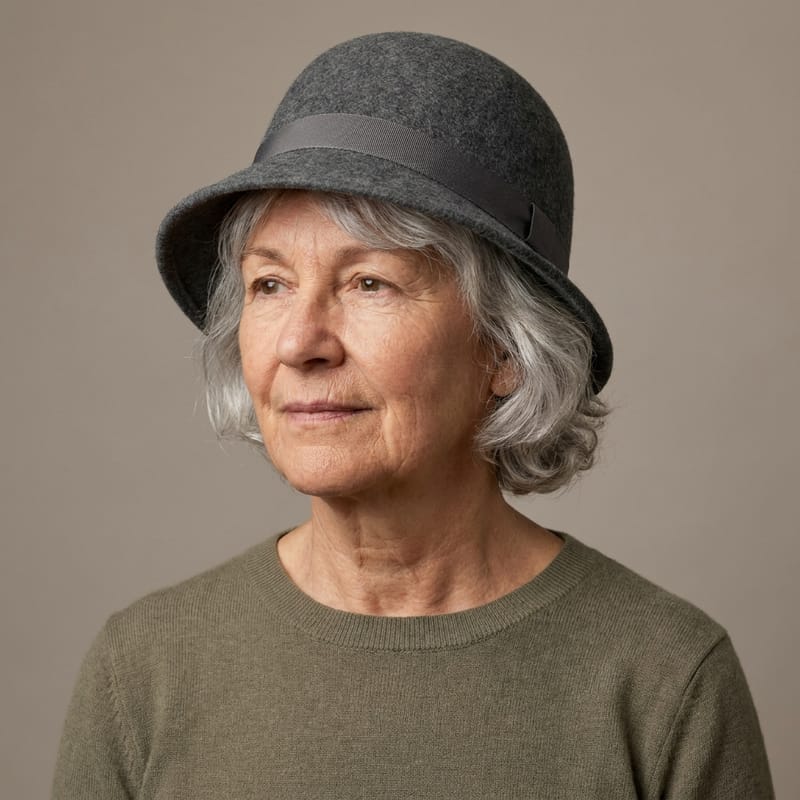
Cloche
A bell-shaped crown, close to the head and worn down to the eyebrows, with a short brim or none. The shape is best known from the 1920s and works best over short hair or a low bun, since it covers most of the head.
Try it on me →How to narrow 16 hats down to yours
Start with where you would wear it. Felt hats go with coats and tailoring, straw with summer linen and cotton, caps and soft hats with everyday clothes. A hat that suits the clothes you already own gets worn; one that needs a new wardrobe stays on the shelf.
Then look at your face. A round face takes height and some angles, a square jaw softer curves, a long face width rather than height. Each face shape has a page that places every style of the gallery for it, for example hats for a round face, hats for a square face and hats for an oblong face. Not sure of your shape? The oval face page describes the proportions every other shape is compared with.
Then size and scale. A brim should be in proportion to your shoulders and a crown to your head: a stingy brim looks lost on a big head, and a wide floppy brim swamps a small one. Measure your head with the hat size calculator before you buy anything in a fitted size, and read how a hat should fit to know what you are checking for in the mirror.
Last, see it on you. A hat changes your whole outline, which is why a hat that looks right on someone else can look wrong on you and the other way round. Put two or three of these styles on your own photo and compare them side by side before you buy one.
FAQ
How many hat styles are there?
There is no fixed number: hatters name dozens of crowns, brims and regional styles. Most hats you will meet are variations of the 16 in this guide, which cover caps, felt hats, straw hats, wide brims and soft hats.
What is the difference between a fedora and a trilby?
The brim and the crown. A fedora has a brim of about 2 1/2 inches worn level or snapped down at the front and a taller crown; a trilby has a shorter brim angled down at the front and up at the back, and a lower crown.
What is the difference between a flat cap and a newsboy cap?
A flat cap is cut from one flat piece of cloth and sits close and trim. A newsboy cap is sewn from eight panels joined at a button on top, which makes it fuller and rounder.
Which hat styles are best for summer?
Straw hats, because they let air through: the Panama, the boater and straw versions of the cowboy hat and the fedora. For sun on your neck and shoulders, a floppy sun hat or a deep bucket hat does more than a cap.
Which hat style suits most people?
A fedora with a medium brim and a moderate crown, and a classic baseball cap, sit well on most face shapes. Extremes take more care: very tall crowns, very short brims and very wide brims depend on your face and build.
Are bowler hats and derby hats the same?
Yes. Derby is the American name for the bowler, the hard felt hat with a rounded crown and a short brim curled up at the sides.
Which hat styles are unisex?
Most of them. Caps, beanies, bucket hats, fedoras, Panamas and berets are worn by everyone. By tradition rather than rule, the cloche and the floppy sun hat are mostly worn by women, the bowler and the flat cap mostly by men.